A town is born
Southern Pacific reaches Mojave on August 8. The railway shapes the town site, with a yard and depot linking the desert to California's growing transportation network.
THE MOJAVE STORY // CHAPTER TWO
Before the roar of jet engines, there was the whistle of the steam locomotive. In 1876, a railway across the high desert gave Mojave its beginning — and connected it to a nation in motion.
DISCOVER THE STORYSouthern Pacific arrives in Mojave
1876 – 2026
From mule teams to the rails
01 / THE BIRTH OF A RAILROAD TOWN
On August 8, 1876, Southern Pacific rails reached Mojave. What began as a construction camp became a junction, a working railroad community and a gateway to the desert.
The railroad laid out the town, established a yard and made Mojave a division point. It brought workers, traders, travelers, materials and an entirely new rhythm of life to a landscape once defined by overland trails.
The locomotives were more than machines. They made distant mining districts accessible to larger markets — and turned a remote settlement into a transportation crossroads.
EXPLORE THE TIMELINE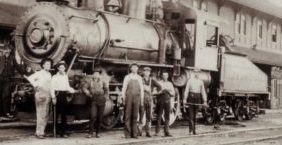
02 / THE TEHACHAPI CROSSING
The Southern Pacific route through Tehachapi Pass was one of the great engineering challenges of early California railroading. Steep terrain demanded ingenious grades, tunnels and an extraordinary loop in the mountains.
An ingenious way to gain elevation while keeping the rail grade manageable.
The northern and southern segments were linked, completing the rail connection between San Francisco and Los Angeles.
This route illustration is symbolic rather than a geographic map.
03 / A CENTURY AND A HALF OF CONNECTION
From the first steam trains to today's freight corridors, the rails helped write Mojave's story.
Southern Pacific reaches Mojave on August 8. The railway shapes the town site, with a yard and depot linking the desert to California's growing transportation network.
Twenty-mule teams begin hauling Death Valley borax to the railhead at Mojave, joining the older overland freight story with the speed of rail transport.
REVISIT CHAPTER ONEGold and other mineral activity expands across the region. Rail service supports freight, local businesses and the movement of people into and out of the desert.
The two railroads merge, carrying Mojave's longstanding rail connections into a new era of freight transport.
Mojave is recognized in Union Pacific's Train Town USA Registry, honoring the long relationship between the community and the railroad.
04 / LIFE BESIDE THE TRACKS
Behind the locomotives stood the railway workers, families, depot staff and travelers whose daily lives shaped Mojave.
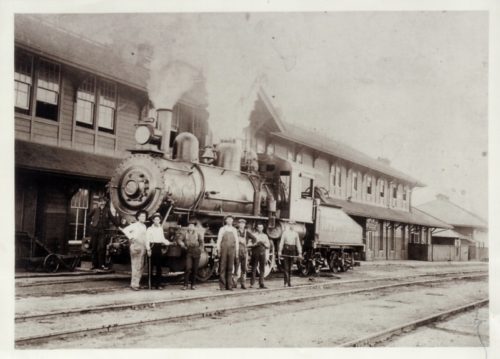
Mojave's station and Harvey House served generations of travelers, meals and connections.
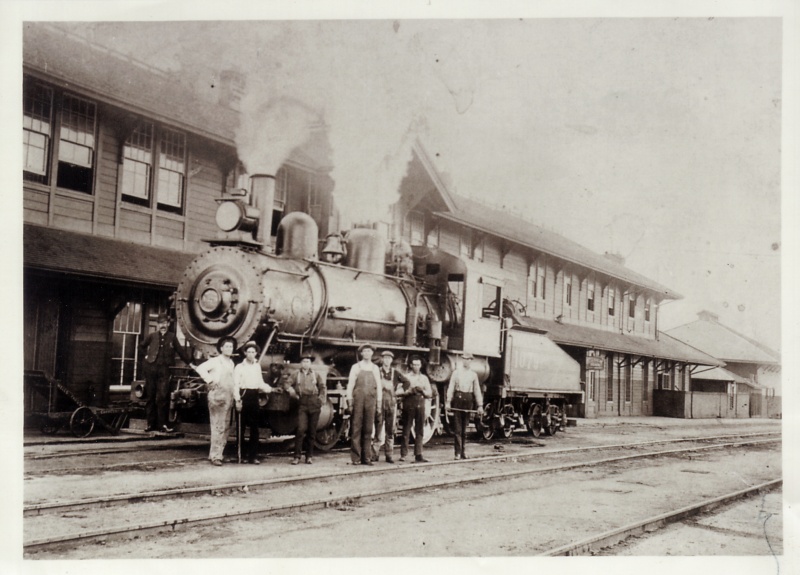
Engineers, crews and maintenance workers kept this town's railroad moving.
05 / A CROSSROADS BUILT TO LAST
Railroad yards and corridors remained central to the region as Mojave moved from mining and steam locomotives into aerospace, manufacturing and modern freight. This is living infrastructure — not only a story of the past.

MOJAVE / 1876—2026
The region's appetite for transportation innovation did not end with steel tracks. The same desert that welcomed the railway became the proving ground for generations of aviation pioneers.
EXPLORE THE RECORD
UNION PACIFIC / MOJAVE ↗ MOJAVE CHAMBER / TRAIN TOWN USA ↗ MOJAVE HISTORY ↗